Biography
Nate Wooley is a Brooklyn-based trumpeter, composer, and publisher whose work has redefined what the trumpet is capable of in the context of free improvisation and contemporary experimental music. Growing up in Clatskanie, Oregon — where his father was a jazz musician — Wooley developed an early foundation in traditional jazz trumpet before moving toward the radical extended technique work that now defines his practice. He has spent two decades systematically dismantling the conventions of his instrument: circular breathing, multiphonics, breath sounds, electronic processing, and spatial composition all feature in a practice that treats the trumpet as a complete sound-producing system rather than a melodic instrument.
His solo trumpet work — documented across multiple releases on his own Pleasure of the Text label — stands as one of the most sustained and formally ambitious bodies of work in the history of the instrument. The Columbia Icefield series, a multi-volume investigation of solo extended technique, is widely regarded as a landmark document of contemporary trumpet practice. Each volume extends the investigation further, testing the boundaries of what a single player, a single instrument, and a single room can produce.
As a collaborator, Wooley has worked with an extraordinary range of musicians: Mats Gustafsson, Chris Corsano, Paul Lytton, Ken Vandermark, Dave Rempis, Anthony Braxton, and many others. His ability to adapt his extended technique approach to radically different musical contexts — from the dense ensemble textures of large-group improvisation to the delicate interplay of intimate duo settings — makes him one of the most versatile and in-demand musicians in the field.
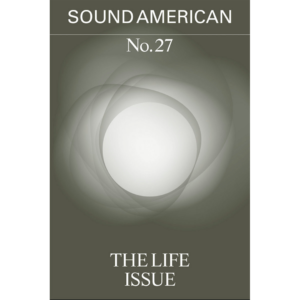
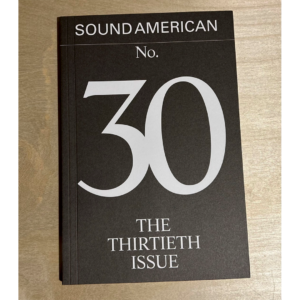
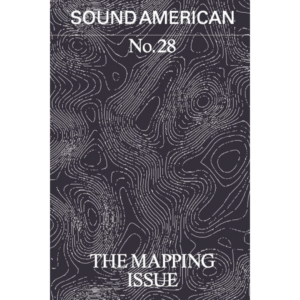
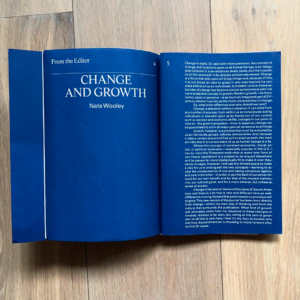
Beyond his performing career, Wooley founded and edits Sound American — a journal and label that has become one of the most respected publications in experimental music, focusing each issue on a specific artist or theme and providing depth and critical context that music journalism rarely achieves. The journal’s function within the Catalytic Sound cooperative is as much intellectual as commercial: it provides the theoretical framework that situates the cooperative’s labels and musicians in a broader artistic and historical context.
Wooley’s dual role as a musician of radical technical ambition and a publisher of serious critical reflection on experimental music is itself a statement about the kind of artist he is: someone who believes that the music deserves serious attention, serious documentation, and serious infrastructure — and who has spent his career building all three.
![Live at De Ruimte 2023 [CAA-062]](https://catalyticsound.com/wp-content/uploads/live-at-de-ruimte-2023-caa-062-300x300.jpeg)
![Live at De Ruimte [CAA-042]](https://catalyticsound.com/wp-content/uploads/a3029307460_10-300x300.jpg)




![After Gaburo [CAA-012]](https://catalyticsound.com/wp-content/uploads/after-gaburo-caa-012-300x300.jpeg)


![[9] Syllables](https://catalyticsound.com/wp-content/uploads/9-syllables-300x300.jpeg)


![Moulin Vert Improvisations [CAA-014]](https://catalyticsound.com/wp-content/uploads/moulin-vert-improvisations-caa-014-300x300.jpeg)