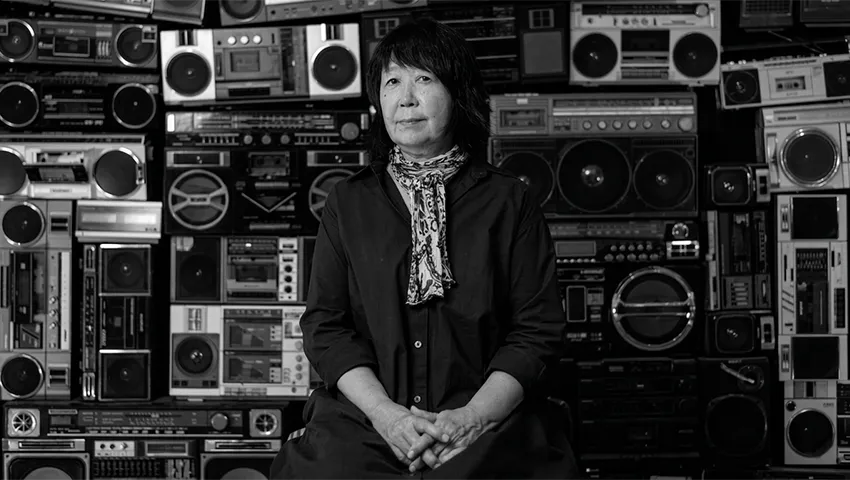
Ikue Mori arrived in New York from Tokyo in 1977, picked up the drums, and immediately started breaking the rules of what they were for. As a founding member of DNA — the no-wave trio that helped define the downtown Manhattan underground — she helped invent a sound that didn’t have a name yet. What came after has been just as unclassifiable.
Over the following decades, Mori transitioned from drums to laptop-based electronics, developing a solo practice and a collaborative vocabulary that has made her one of the most distinctive voices in global experimental and improvised music. She has worked with John Zorn, Thurston Moore, Zeena Parkins, and countless others — always as an equal voice, never as an accompanist.
Her presence in Catalytic Sound artist-run network is a reminder of how deep the roots of the independent improvised music scene actually go. In this Q&A, Mori talks about the no-wave years, the laptop, and why the spirit of that downtown scene is still very much alive.
Q: What musicians and artists have you been looking at lately?
A: This isn’t a musician or artist, but I was very impressed with the organization in Porto, Portugal called “Sonoscopia”. It’s a small but international artist residency with concert event spaces, installations, and an instrument making studio, mixed with the local community. Great place to interact with if you happen to be in Porto.
Q: Films and books you’ve been into lately?
A: I have been reading and inspired by the writer and actress Izumi Suzuki. So much so that I started to make a whole tribute album to her, collaborating with Zeena Parkins.
Q: Last performance you saw that expanded the way you think about your own work?
A: I have been to many of John Zorn’s 70 year anniversary events. I’m very impressed with the many young musicians. Incredible performances. Classical works to metal bands.