Philosophy
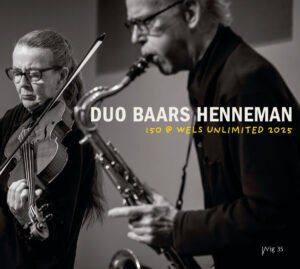
Wig Records was founded in 1988 by Dutch saxophonist Ab Baars and violist Ig Henneman — two musicians who had been playing together since the early 1980s and needed a platform to document a musical relationship that no existing label was equipped to handle. Wig operated for 35 years and released exactly 35 titles before closing in 2025 with a final live recording from the Wels Unlimited festival: a symmetry that feels entirely intentional.
The label existed as a vehicle for Baars and Henneman’s work and the broader Dutch free improvisation scene — a community with deep roots in the European experimental tradition and a consistent refusal to adapt its music for commercial markets. As a member of the Catalytic Sound cooperative, Wig was part of an international network that gave this resolutely local music global visibility. Its closure in 2025 marks the end of one of the cooperative’s founding voices.
Aesthetic
Wig releases have the visual character of Dutch design at its most disciplined: clean, typographically precise, and organized around the idea that a record cover’s job is to identify and contextualize, not to sell. There is no flourish for its own sake — every design decision serves the music and the musicians.
This aesthetic consistency across 35 releases gives the Wig catalog a coherence that reflects the musical coherence of the work itself: a body of recordings that developed organically over four decades, never chasing trends, never adjusting its aesthetic for external expectations. The catalog looks as committed as it sounds.
Emblematic Catalog
The catalog’s heart is the Baars-Henneman duo: a musical conversation of extraordinary intimacy, built over four decades of mutual listening. Their recordings — spare, lyrical, and deeply interactive — document a relationship in which the distinction between composition and improvisation has long ceased to be meaningful. The final release, 150 @ Wels Unlimited 2025, was described by critics as sounding as if every note landed in exactly the right place.
Beyond the duo, Wig documented Baars’s trio work, his solo recordings on tenor saxophone, clarinet, and shakuhachi, and Henneman’s collaborations with other improvisers from the Dutch scene. Key releases include Autumn Songs, the duo’s breakthrough document, and a series of live recordings that capture the pair at their most immediate and unguarded.