Biography
Damon Locks is a Chicago-based visual artist, educator, vocalist, and sound manipulator whose expansive creative practice completely dismantles the traditional boundaries of genre. For more than three decades, his voice and electronic setups have been a vital element of the underground music scene, constantly shifting shapes across punk bands, free jazz ensembles, hip-hop formats, and community-driven art collectives. No matter the project, his work anchors itself around a core set of deep-seated values: radical politics, the celebration of Black cultural traditions, the profound strength of community noise, and a firm belief that art can spark real social transformation.
He initially landed in Chicago to finish his fine arts degree at the School of the Art Institute of Chicago, a move that anchored him in the city’s fertile creative ecosystem. From co-founding the 90s post-hardcore outfit Trenchmouth and the genre-bending grooves of The Eternals to joining forces with Rob Mazurek’s Exploding Star Orchestra, Locks has shown a remarkable ability to navigate disparate sonic worlds with total authenticity.
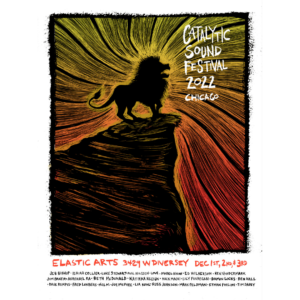
His artistic reach expanded significantly with the creation of the Black Monument Ensemble, a multi-generational group that weaves together free jazz textures, dense electronic sampling, choir arrangements, and powerful spoken word into an immersive live experience. This project connects the deep historical roots of the Black American avant-garde straight into our contemporary reality, capturing critical acclaim with landmark releases like Where Future Unfolds and NOW via International Anthem. Parallel to his musical output, his visual art operates in perfect harmony with his sound—delivering bold, graphic, and civically engaged work that lives on record jackets, gallery walls, and community spaces alike.
His commitment to education and social justice is equally foundational; he has spent over a decade teaching art inside the Stateville Correctional Center through the Prison + Neighborhood Arts/Education Project and sharing his expertise in improvisation within the Sound Department at the School of the Art Institute of Chicago. As a key collaborator within the Catalytic Sound network, Locks frequently brings his distinct sampler and vocal aesthetic to projects like Medicine Kit alongside Ken Vandermark and Terri Kapsalis. His ongoing presence within the cooperative highlights a shared understanding that the future of improvised music is deeply connected to broader conversations about community, race, access, and power. Whether spinning records, building rich sound collages on a sampler, or leading a fifteen-piece ensemble, Locks treats sound not just as an aesthetic choice, but as an active, living force designed to bring people together.